
Headlines
2027: Crises, Marr Party Primaries, Lawmakers Expelled

By Kazie Uko
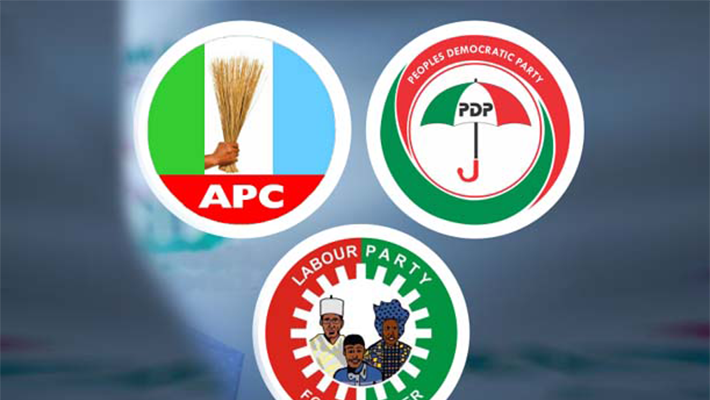
Nigeria’s major political parties are heading into the 2027 general election primaries beset by leadership disputes, court battles and allegations of fraud, raising fresh questions about whether credible candidates will emerge from the process.
The Independent National Electoral Commission (INEC) fixed the conduct of party primaries, including resolution of disputes arising from them, between April 23 and May 30, 2026. But as that window draws to a close, the internal machinery of at least three major parties remains fractured.
The crisis is deepest inside the Peoples Democratic Party (PDP), Nigeria’s main opposition group.
Two rival blocs — one aligned with Oyo State Governor Seyi Makinde and another loyal to Minister of the Federal Capital Territory, Nyesom Wike — have both laid claim to the legitimate leadership of the party, each convening separate National Executive Committee (NEC) meetings, constituting parallel National Working Committees (NWC) and releasing competing timetables for the 2027 primaries.
The Makinde-backed faction appointed Kabiru Turaki as chairman of a 13-member interim NWC at what it described as the party’s 103rd NEC meeting in Abuja. The Wike camp dismissed the gathering as illegal, rejecting all its resolutions and insisting no valid NEC meeting was held.
The two factions also parted ways on the cost of presidential nomination forms. The Makinde-aligned bloc pegged the presidential form at ₦100 million — comprising ₦10 million for expression of interest and ₦90 million for nomination — while the Wike camp fixed nomination at ₦50 million with a ₦1 million expression of interest fee.
Mr Wike, a former Rivers State governor, threw an open challenge to the Turaki-led camp, daring it to prove its claim to leadership by opening a party secretariat and bank account in Abuja and vowing to shut down any such move.
“When will people stop being fraudulent? You cannot disobey court judgments and then turn around to deceive Nigerians that you have a legitimate structure. That is not how democracy works,” Mr Wike said.
The Makinde camp was unmoved. Ini Ememobong, the faction’s National Publicity Secretary, described Mr Wike’s remarks as an embarrassment and an apology to Nigerians for his past elevation, adding that the faction’s primaries and national convention would proceed as planned.
The development follows a Supreme Court ruling that voided the PDP’s previous leadership, deepening the scramble for control of the party’s national structures ahead of the primaries.
The Labour Party (LP) is equally mired in a leadership dispute. INEC recognised Nenadi Usman as national chairman following a court ruling, a development the commission said has legal backing. But a faction loyal to Julius Abure rejected the position, arguing that a stay of execution obtained on the matter means all parties must maintain the status quo, with Mr Abure remaining chairman until the substantive suit is determined.
The ruling All Progressives Congress (APC) has not been spared. No fewer than 48 of its incumbent House of Representatives members lost their re-election bids in primaries conducted nationwide, with the final figure expected to climb as results from several states are still being collated.
In Taraba State, APC primaries descended into controversy, with aspirants alleging manipulation, late arrival of electoral materials and claims of predetermined outcomes. Governorship aspirant David Sabo Kente alleged that no genuine House of Representatives primaries took place in several parts of the state.
In Lagos State, aspirant Ademola Amure described the Epe Federal Constituency primaries as “shambolic, massively flawed, and fraudulent,” citing reports of gunfire, thuggery and voter intimidation.
In Ondo State, a seven-member election committee split over results, halting the declaration of outcomes, amid allegations of pressure to announce consensus candidates linked to Governor Lucky Aiyedatiwa.
Analysts warn that the failure to resolve these disputes before the primaries window closes could carry grave consequences for the 2027 elections. A former national auditor of the PDP, Ray Nnaji, expressed doubt that the party would resolve its crisis and field a presidential candidate in time, saying only a court pronouncement or a deliberate roundtable between the warring camps could end the impasse.
With opposition parties having spent more time in courtrooms than on the campaign trail, concern is growing that the 2027 electoral cycle could be contested with severely weakened alternatives to the ruling party.
The general elections are scheduled for January 16, 2027, for the presidency and National Assembly, and February 6, 2027, for governorship and state assembly seats.